Building Korea’s Digital Agora for Civic Dialogue and Action.
Public-interest technology and digital commons for peaceful lives and a peaceful world.
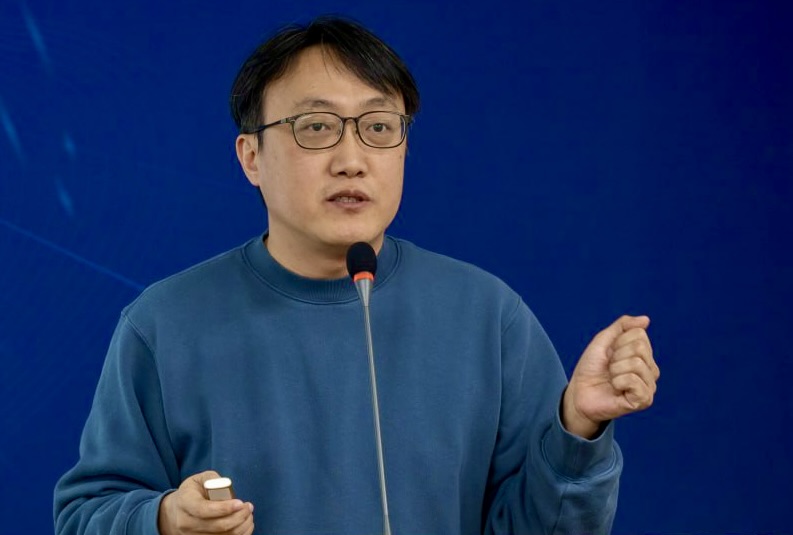
Beyond openness and connection, accumulation and automation—through technologies of trust and cooperation, of sharing and liberation—I build platforms and collectives that help good people and citizens contribute to democracy, the commons, and peace. My hope is that free and joyful individuals, trusting and cooperating with one another, can build abundant and sustainable communities, and live peaceful lives in a peaceful world.
I currently work at Parti Cooperative and Code for Korea.
Current Roles
– Chair, Parti Cooperative (2015–present)
– Organizer, Code for Korea (2020–present)
– Member, AI Democracy Division, Presidential Council on National Artificial Intelligence Strategy
– Advisor on Social and Solidarity Economy, Ministry of the Interior and Safety of Korea
Biography
KWEON, Ohyeon is a digital democracy activist who builds digital civic squares and civic collaboration platforms to expand civic space and social capital; a digital social and solidarity economy entrepreneur who turns technology and AI into commons to expand social assets and public goods; a civic hacker who builds civic hacking projects with fellow citizens so that anyone can solve social problems with their own expertise; and an advocate of democratic technology and AI. He has built digital public squares in Korea since 2001—platforms, tools, and communities where citizens dialogue, deliberate, and act together. His vision is to make digital technology and AI belong to citizens, and to realize a peaceful digital democratic republic and a basic universal society, built on inclusion and solidarity, abundance and sustainability.
He started in electoral politics. From 2001 to 2004, he ran internet operations for the Democratic Labor Party, Korea’s progressive labor-based party, working with its Busan chapter and on National Assembly campaigns. He planned Pangari, the party’s online media platform, and served on its Internet Party Committee—through the years the party first entered the National Assembly, winning ten seats in the 2004 general election. That was the first public square he built online.
In the 2000s, as a product manager and engineering lead at Daum Communications, he helped build Agora, the largest online public square of its era in Korea, which became the backbone of citizen mobilization during the 2008 candlelight protests. He also led development for Tistory and Daum View (Bloggernews), shaping the foundations of Korea’s citizen media ecosystem.
In July 2012, Code Namu (Code Tree)—a volunteer community formed by activists from Creative Commons Korea and the Web Science Workgroup—held an open data camp. Reporting at the time described it as the first open data gathering Korean citizens had organized for themselves. Among the drafts that came out of the camp was Ansim Hospital: an idea to map antibiotic and injection prescription rates from the national health insurance review service, giving people a basis for choosing a clinic. He picked the idea up after the camp and built it out, later widening it to food safety and emergency equipment data and renaming it Ansim-i—one of Korea’s first civic hacking projects. To carry the project forward, he started a civic tech community as a branch of Code Namu and named it PeaceCode—the name he still writes under today. In 2013, he founded UFOfactory, a social enterprise that partnered with over 1,200 nonprofit organizations to build their digital infrastructure. UFOfactory merged with Slowalk in 2016, where he served as CEO and incubated Stibee, now Korea’s leading nonprofit email platform. In 2024, he reopened a public-interest technology incubator line inside Parti, and continues to run it today.
In 2015, he founded Parti, dedicated to digital democracy. It was incorporated as a social cooperative in 2018 and completed its organizational merger in 2020. Parti is a digital agora for civic dialogue and action—a public square for the digital age, led by its crew members and supported by citizens. The cooperative form was itself a choice: for a public square to remain beyond the reach of capital or any government, citizens must own it directly.
Parti’s work centers on two interconnected missions. The first is sustaining the digital citizens’ commons where civic life happens: Campaigns.do, Korea’s leading platform for citizen campaigning, fact-checking, and collective action; Mixon, an appropriate-technology platform that lets nonprofits and cooperatives build their own participatory spaces; and Galaxy Voting, Star-to-Star Dialogue, and Korea Talks, independently developed dialogue tools that visualize opinion landscapes and match citizens across differences for one-to-one dialogue. The second is building governance solutions that connect citizens to decision-making: DemosX, a citizen-government collaboration platform that powers Democracy Seoul, Gwanghwamun 1st Avenue, and the Presidential Committee for National Cohesion’s public engagement platform, enabling the full pipeline from citizen proposal to deliberation to policy; and Townhall, a large-scale online voting and deliberation platform used for participatory budgeting and citizen assemblies.
These platforms are grounded in practice. For over a decade, Parti has convened up to twenty offline deliberations, living labs, and civic workshops every month—more than 215 documented public forums reaching 56,620 direct participants, while 5.4 million citizens have engaged across Parti’s digital platforms (as of 2025). Every tool Parti built was shaped by what was first learned in real rooms with real citizens.
In 2018, he proposed Facing the Ocean (FTO), a civic tech network connecting hackers and activists across Korea, Taiwan, and Japan, and led it as a principal organizer. In 2020, as an organizer at Code for Korea, he proposed and led the Mask App and Personal Safety Number projects—Korea’s most internationally recognized civic tech responses to COVID-19, for which Code for Korea received the Minister’s Award from Korea’s Ministry of Science and ICT. He has also served as co-chair of the FactCheck.net Foundation (2021–2023), Korea’s first crowdsourced fact-checking platform.
Today, he serves on Korea’s Presidential Council on National Artificial Intelligence Strategy as a member of its AI Democracy Division, and as an advisor to the Ministry of the Interior and Safety on social and solidarity economy. He is also a board member of the Korean Association for Policy Studies, the Korean Society for Journalism and Communication Studies, and the Changbi Foundation for Culture, bridging civic practice with academic and cultural leadership. Both Parti Cooperative and Kweon himself have received Presidential Commendations from the Government of Korea—Kweon in 2021 for his work on Korea’s COVID-19 response, under the Government Performance Evaluation citation, and Parti in 2026 for building a citizen-led digital civic square and for supporting citizens’ self-organized digital activity during and after the 12·3 martial law crisis, under the ICT Service Merit citation. Parti’s work has been recognized across Korean society—by government, civil society, labor, media, the social economy, academia, and international networks—a breadth that reflects its identity as a digital agora belonging to all citizens.
Across every chapter of his work, one conviction has remained constant: the digital public square should belong to citizens—not to capital or governments. That is what he has built, and what he continues to build.
Awards & Recognition
Parti and Kweon Ohyeon have been recognized across Korean society—by government, civil society, labor, media, the social economy, and international networks. This breadth of recognition reflects Parti’s identity as a digital agora that belongs to all citizens.
- From the Government of Korea
- 2026 — Presidential Commendation, ICT Service Merit Award (Parti Cooperative) — for building a citizen-led digital civic square and supporting citizens’ self-organized digital activity during and after the 12·3 martial law crisis
- 2021 — Presidential Commendation, Government Performance Evaluation (individual) — for work on Korea’s COVID-19 response
- 2020 — Ministerial Award (Ministry of Science and ICT), 1st iNews24 Social DNA Innovation Awards (Code for Korea, for the COVID-19 Mask App and Personal Safety Number projects)
- From Civil Society and the Democracy Movement
- 2026 — Special Prize, 7th Roh Hoe-chan Award (Parti Cooperative)
- 2023 — Encouragement Prize, Korea Democracy Awards (Parti Cooperative; Korea Democracy Foundation)
- From Labor
- 2025 — Public Interest Award, Korean Government Employees’ Union (Parti Cooperative)
- From Media and Journalism
- 2025 — Open Data Special Prize, 8th Korea Data Journalism Awards (Parti Cooperative)
- From the Social Economy and Innovation Communities
- 2023 — Outstanding Social Economy Enterprise Award (Parti Cooperative; Korea Social Enterprise Promotion Agency & Amazon Web Services)
- 2021 — Outstanding Award, 3rd Korea Social Innovation Changemakers
- From the Technology and Design Communities
- 2025 — Civic Tech Award, Human Technology Awards (Parti Cooperative)
- 2019 — iF Design Award, Service Design Category (Democracy Seoul)
- 2018 — Grand Prize, Special Category, Human Technology Awards
- From International Networks
- 2024 — Global Fact-checking Fund Build Grant Recipient, International Fact-Checking Network (IFCN)
- 2021 — Korean Civil Society Delegate, OGP Global Summit (Seoul)
Public Service Appointments
- Current
- Presidential Council on National Artificial Intelligence Strategy, Member, AI Democracy Division
- Ministry of the Interior and Safety, Advisor, Social and Solidarity Economy Civilian Advisory Group
- Ministry of the Interior and Safety, Member, Policy Advisory Committee, Civic Innovation Division
- Ministry of Gender Equality and Family, Member, Policy Advisory Committee (AI subdivision)
- Korean Association for Policy Studies, Board Member
- Changbi Foundation for Culture, Board Member
- Former
- Civilian Member, 3rd Korea Open Government Committee
- Civilian Member, 1st 2050 Carbon Neutrality Committee (Citizen Participation Division)
- Civilian Member, 4th Civil Society Development Committee (Presidential Decree)
- Expert Committee Member, Presidential Committee on Jobs (Social Economy)
- Member, Government Innovation Promotion Council
- Member, LH Public Empathy Committee
- Member, 1st Data-Based Administration Activation Committee
- Working Member, 4th Public Data Strategy Committee
- Member, Digital Inclusion Forum
- Principal (1st & 2nd), AYARF (Asia Young Activist & Researcher Forum)
- Member, Internet Party Committee, Democratic Labor Party (2001–2004)
- Additional Affiliations
- Board Member, World-Changing Dreams (NGO)
- Board Member, Korean Society for Journalism and Communication Studies
- Selected Civic Projects
- Personal Safety Number (2021) — Proposed and built with Korea’s Personal Information Protection Commission and Code for Korea’s civic developers. Replaced handwritten visitor logs with privacy-preserving codes to protect citizens’ personal data; produced implementation guides and sample code for Kakao, Naver, and PASS, and the KDCA’s safety-number generator.
- Korea Peace Campaign — Digital Advocacy (2021–) — Ran the digital campaign as part of a civil-society coalition. endthekoreanwar.net, in Korean, Japanese, and English; about 113,538 signatures (point-in-time figure, per source).
- Pangari (2001–2004) — The Democratic Labor Party’s online media platform; he planned it. Used through the years the party first entered Korea’s National Assembly, winning ten seats in the 2004 general election.
Career History
- 2015–present | Chair, Parti Cooperative
- Master Planner, Democracy Seoul, Seoul Metropolitan Government (2017–2019)
- Co-Chair, FactCheck.net Foundation (concurrent, 2021–2023)
- 2020–present | Founder & Organizer, Code for Korea
- 2013–2020 | Founder & CEO, UFOfactory (social enterprise; merged with Slowalk in 2016, served as CEO of the merged entity)
- 2011–2012 | Digital Business Development Team, Cheil Worldwide
- 2006–2010 | Product Manager & Engineering Lead, Daum Communications
- 2004–2005 | Software Engineer, Daewoo Information Systems
- 2001–2004 | Internet Lead, Democratic Labor Party (Busan chapter and National Assembly campaigns); planner of Pangari, the party’s online media platform; member of its Internet Party Committee
Writing, Interviews & Talks
Writing, interviews, talk materials, and the press coverage they drew, gathered by theme. The bracket before each entry marks what kind of material it is. Anything not yet grouped under a theme sits at the top. More writing at peacecode.net.
- [Writing] “Open Editing Algorithm: A Collaborative News Promotion Algorithm Based on Users’ Voting History” — 2009 International Conference on Computational Science and Engineering, IEEE, Vancouver, BC, August 2009
Democratic AI
- [Talk] Democratic AI — slides, in Korean. On citizen ownership of and decision-making over AI, and on designing it as democratic infrastructure.
- [Writing] “Neither Market-Driven nor State-Led: A ‘Democratic AI’ Is Possible in Korea” — OhmyNews, 〈Social Korea〉 No. 432, 1 July 2026
- [Press] “Shift to Citizen-Centered AI Ownership and Decision-Making—Design It as Democratic Infrastructure” — Hankyoreh, 20 August 2026
Democracy and AI
- [Talk] Democracy and AI — slides, in Korean. A diagnosis of democracy in the age of AI, and a response.
The Digital Public Sphere and the Commons
- [Writing] “The Genealogy of Korean Digital Democracy: From the Efficacy of the Square to Everyday Democracy” — Trends and Perspectives, Vol. 127, Summer 2026
- [Writing] “The Collapse of the Digital Public Sphere and the Transition to Social Commons” — Sasangye (Korea Intellectual Review), Vol. 212, May–June 2026
- [Writing] “Chapter 6: The Rebirth of Democratic Public Deliberation in the Hyper-Connected Era” — in Rivers to the Sea: Waves of Solidarity and Self-Help, ed. Korea Social Value Connect Foundation
Parti and the Digital Public Square
- [Interview] “Parti: A Platform Implementing Democracy in the Digital Age in Korea” — Nao M. (Code for Japan), note.com (Japanese), January 2026. Written after attending Parti’s 10th anniversary event.
- [Interview] “Building a Digital Public Square for Citizens — Parti, a Social Cooperative in Korea” — Shijimi, NO YOUTH NO JAPAN (WE CO·OP Project), note.com (Japanese), May 2026. Korean translation at campaigns.do.
- [Interview] “The State of Korea’s Social Cooperatives ⑧ — Parti Co-op” — Mayuko Kamimae, 季刊『社会運動』 No. 463, Citizen Sector Policy Institute (Japanese), July 2026. Print-only serialized column, 8th installment. Title, author, and placement confirmed from the publisher’s table of contents; article text unverified.
- [Interview] “Parti, the Lab for Digital Democracy: Building a Better Society with Citizens” — Lifein, July 2025
- [Interview] “From Agora to Parti and Would You Party: Two Decades of Social Innovation and Democracy Experiments” — Hankyoreh, 2018
- [Interview] “The Developer Who Programs a Better World” — Hankook Ilbo, 2018
- [Interview] “In 2008 During the Mad Cow Protests, Daum Agora’s Servers Crashed—We Were Frantic” — Hankyoreh, 2015
- [Interview] “Civic Hackers Quell the Mask Crisis: Code for Korea Wins Social DNA Innovation Award” — iNews24, 2020
Other Press
- “Parti Co-op Receives a Presidential Commendation for ICT Service Merit” — Lifein, 24 April 2026. Awarded 21 April 2026 at the Science and ICT Day ceremony hosted by the Ministry of Science and ICT and the Korea Communications Commission, for building a citizen-led digital civic square and for contributing to citizens’ self-organized digital activity during the 12·3 martial law crisis. Primary source for the 2026 commendation’s title, date, and citation.
- “Open Up More of the Public Data Behind Peace of Mind” — Bloter, December 2012. On Ansim-i (formerly Ansim Hospital) and the four asks he presented at the Korea Semantic Web Conference: open access, standardization, an ecosystem, and seed funding. Primary source for the origin of the name PeaceCode.
- “We Built Public-Interest Services out of Public Data” — Bloter, July 2012. On-site record of Code Namu’s first open data camp (20–21 July 2012, Hi Seoul Youth Hostel, ~50 participants). Ansim Hospital heads the list of eight projects built there.
- “The ‘Exit’ of Daum Agora, Which Carried the Candlelight of a Decade Ago” — Media Today, December 2018. On the shutdown of Daum Agora.
Key Milestones
- 2020s
- 2026 Parti’s 10th anniversary. Presidential Commendation, ICT Service Merit. Special Prize, Roh Hoe-chan Award. Published Parti’s 100 Functions of Digital Democracy.
- 2025 Recognition of Parti widened across civil society and government.
- 2024 Strengthened Parti Solutions: Mixon, Townhall, and the revival of UFOfactory. Developed Parti Citizens services: CitizenPass, Campaigns.do, DemosX, and Data Trust.
- 2023 Co-organized FTO (Facing the Ocean) Jeju. Slowalk exit.
- 2022 Parti’s Butter Knife Crew and “Even So, We”; expanded Campaigns.do.
- 2021–2023 Founded FactCheck.net—developed Korea’s first citizen-participatory fact-checking model, platform, and operations.
- 2021 CPO at alookso. OGP Global Summit. Member of the Carbon Neutrality Committee and the Civil Society Development Committee.
- 2020 Parti Ltd. donated to and merged into Parti Social Cooperative.
- 2020 Parti Citizen Data Lab. Code for Korea: Mask App and Personal Safety Number development.
- 2010s
- 2019 FTO (Facing the Ocean) Okinawa and Tainan—a gathering of civic hackers from Korea, Taiwan, and Japan.
- 2018 Parti Social Cooperative incorporated.
- 2018 Proposed FTO (Facing the Ocean) and led it as a principal organizer—a civic tech network across Korea, Taiwan, and Japan.
- 2017–2019 Master Planner of Democracy Seoul. Developed DemosX, a citizen-government collaboration platform model.
- 2016 Parti GovCraft prototyping. Civic political platform experiments including “I Need to Know,” “National Assembly TalkTalk,” and Would You Party.
- 2016–2019 After the UFOfactory–Slowalk merger (2016), served as CEO of the merged entity; spun off Stibee. Partnered with over 1,200 public-interest institutions in Korea.
- 2015 Founded Parti Ltd. Prototyped democracy platforms including Canoe and Townhall.
- 2013 Founded UFOfactory—a social enterprise specializing in technology for nonprofits and social innovation.
- 2012 (July) Code Namu open data camp—built Ansim Hospital (later Ansim-i), one of Korea’s first civic hacking projects; started the PeaceCode community.
- 2012 Cheil Worldwide—planned mobile and social advertising platforms.
- 2000s
- Daum Communications—planning, development, and operations for Agora, Daum View (Bloggernews), Tistory, and more.
- Daewoo Information Systems—operated procurement and sales systems; led the procurement domain of the next-generation GWIS project.
- Democratic Labor Party Busan branch—member of the Electronic Party Committee; early sysop of MinJiNe; planned and developed Pangari, a general election response platform.
Contact
- Email: ohyeon@parti.coop / rest515@gmail.com
- LinkedIn: linkedin.com/in/ohyeon-kweon
- Twitter/X: @rest515
- Blog: peacecode.net
- Parti: parti.coop
- Code for Korea: codefor.kr


댓글을 달려면 로그인해야 합니다.